Core vaccine schedule
FVRCP is one combined shot against feline herpesvirus, calicivirus and panleukopenia. Feline leukemia (FeLV) is recommended for every kitten, because a kitten's future life indoors or out is hard to predict.
| Age | Vaccine | Note |
|---|---|---|
| 6 to 8 weeks | FVRCP, first dose | The kitten series starts. |
| Every 3 to 4 weeks after | FVRCP boosters | The last kitten dose is given at 16 weeks or later, often between 16 and 20 weeks. |
| From 8 weeks | FeLV, two doses 3 to 4 weeks apart | Recommended for all kittens. |
| From 12 weeks | Rabies | Timing follows local law; required in many places. |
| 6 to 12 months | FVRCP booster | Your vet picks the exact age. |
| Every 3 years | FVRCP | For adult cats. |
| Every 1 or 3 years | Rabies | Depends on the vaccine used and local law. |
| Every 1 to 2 years | FeLV | For adult cats that go outside or live with an FeLV-positive cat. |
Do indoor cats need vaccines?
Yes, the core ones. Panleukopenia and the respiratory viruses can come into the home on shoes, clothes and hands, and an indoor cat can still slip outside or need boarding. Rabies rules usually apply to indoor cats as well.
Lifestyle vaccines such as FeLV boosters for adults depend on whether your cat goes outside or meets other cats. Ask your vet.
Missed a dose?
Do not restart the series on your own; ask your vet. Usually the series simply continues, sometimes with one extra dose.
Call your vet after a vaccine if
- Your cat has facial swelling, hives, vomiting or trouble breathing within hours of the shot. Go now.
- A lump at the injection site lasts more than three months, grows larger than 2 cm, or keeps growing a month after the shot. Vets call this the 3-2-1 rule.
- Mild tiredness or a sore spot for a day is common and usually passes on its own.
How Miyu helps with vaccines
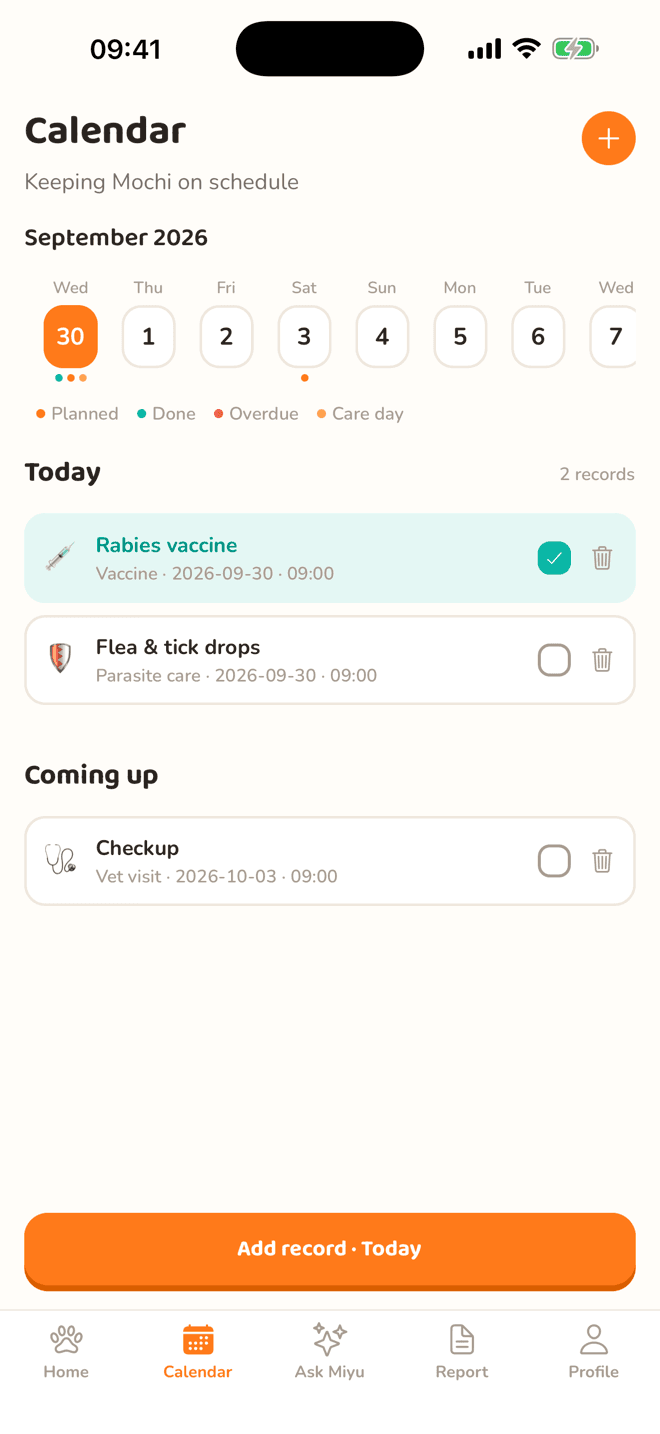
Log each vaccine with its date and set it to repeat every year or every three years. Miyu schedules the next one and reminds you at the time you choose. Overdue items stay visible instead of getting buried, and the full history is ready when your vet asks.
Frequently asked questions
When do kittens get their first shots?
Usually at 6 to 8 weeks, with FVRCP boosters every 3 to 4 weeks until 16 weeks or older, plus two FeLV doses and rabies.
Do indoor cats need vaccines?
Yes, the core vaccines. Some viruses travel in on shoes and clothes, and rabies rules usually apply to indoor cats too.
How often do adult cats need vaccines?
FVRCP is usually every three years after the first-year booster. Rabies is every one or three years depending on the vaccine and local law. FeLV depends on whether your cat goes outside.
What is the FVRCP vaccine?
A combined shot against feline viral rhinotracheitis (herpesvirus), calicivirus and panleukopenia, the three core viral diseases of cats.
Sources
General guidance consistent with these veterinary sources. They did not review this page.
- 2020 AAHA/AAFP Feline Vaccination Guidelines · American Animal Hospital Association
- Vaccination Guidelines · WSAVA
- Vaccines for Cats · VCA Animal Hospitals
This guide is general information, not veterinary advice. Miyu is not a veterinarian and does not diagnose. If your pet seems unwell or you are worried, contact your vet.
